
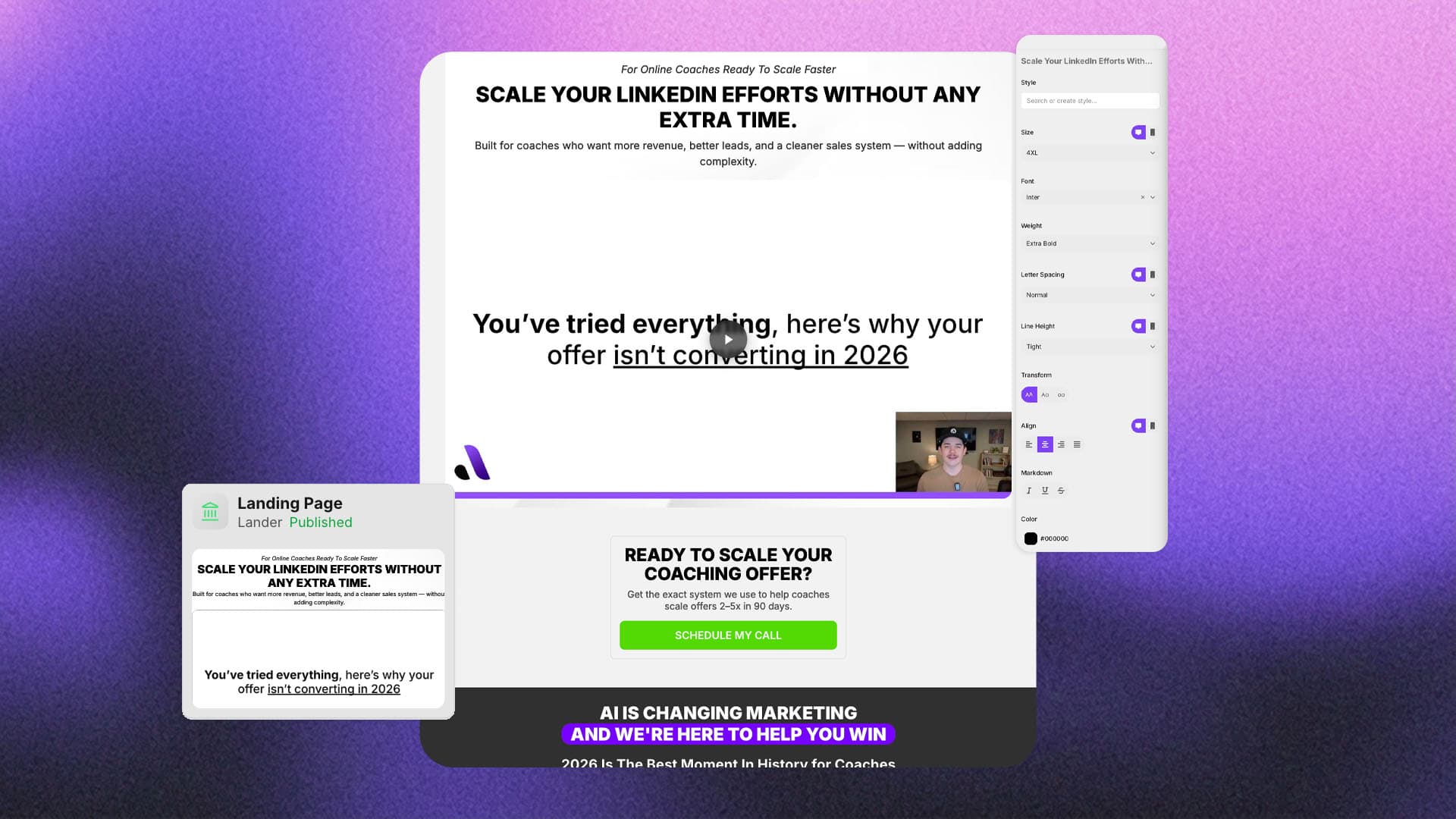
Why pages belong in the marketing OS
Landing pages are not a separate product—they are how campaigns become real. When pages live in a different tool than copy, offers, and experiments, every launch becomes a coordination project: update the doc, update the builder, fix the tracking, hope nothing drifted. Site pages in Fig sit next to the content and routing that already power your funnels.
What you build with
Pages draw from the same structured content and components as the rest of the workspace. You are not re-keying headlines in a WYSIWYG that nobody trusts.
| Piece | How it shows up on the page |
|---|---|
| Content manager | Canonical copy blocks and fields |
| Personas & offers | Context for variants and messaging |
| Smart variants | Experiments wired to URLs and segments |
| Reporting | Events tied to what visitors actually saw |
From draft to live without thrash
Preview stays honest because the page reads from source-of-truth fields, not one-off text nodes. When you promote a change, UTMs, forms, and downstream actions stay aligned with the story you approved.
When this is the right next step
If your team is tired of “update Notion, then update Webflow, then fix the tag,” but you still need real marketing pages—not a generic CMS science project—keeping pages inside Fig collapses handoffs into a single workflow.