
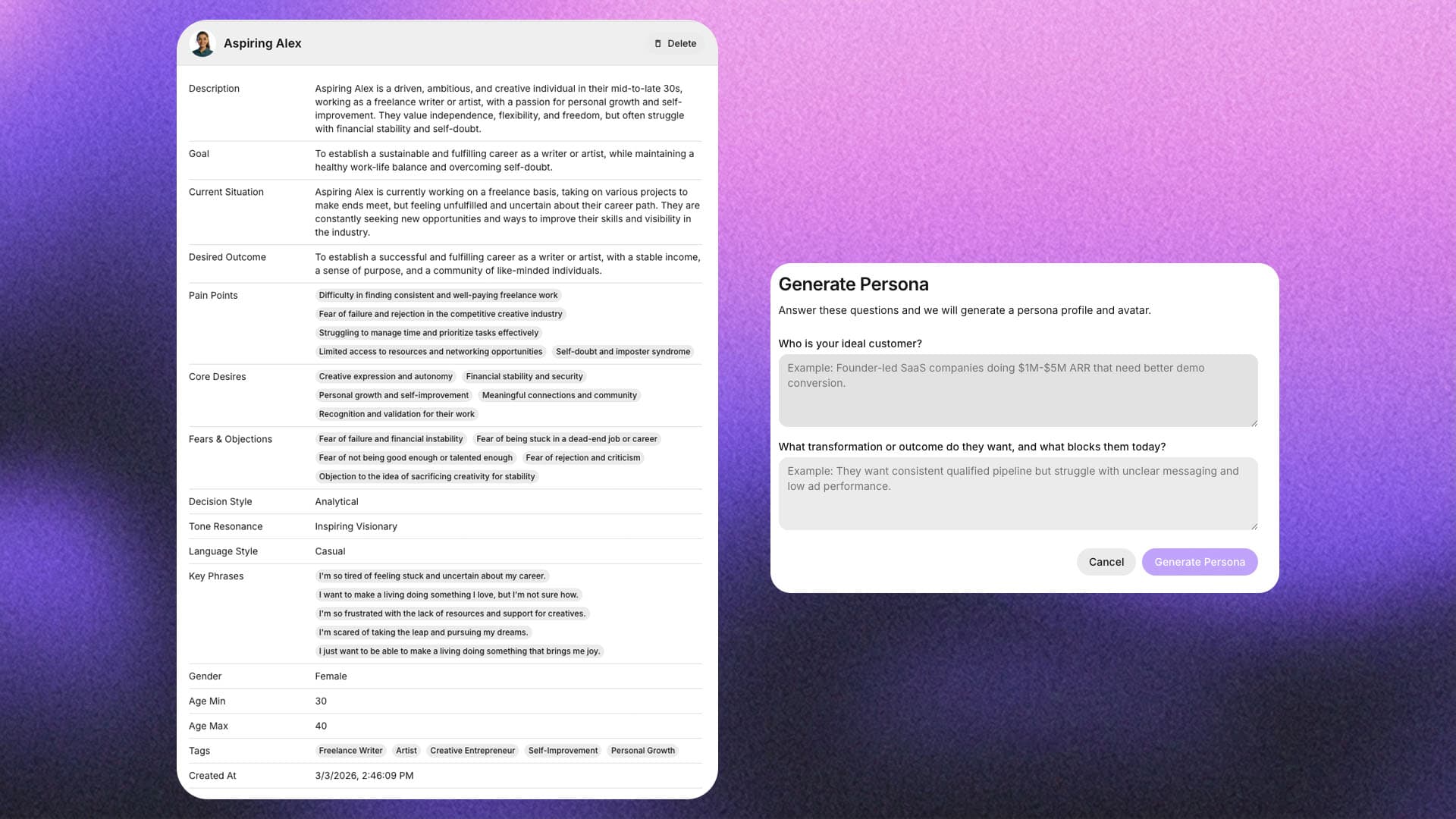
Why personas should be operational, not decorative
Most persona decks die in a PDF. Growth work still happens in Slack threads and ad-hoc docs. Personas in Fig are living inputs: every writer, experiment, and agent pull can reference the same audience definition instead of improvising from memory.
What a persona holds
Personas capture the language your team should use—not only demographics. That makes them useful for copy, routing, and reporting without a separate “insights” silo.
| Element | Why it matters |
|---|---|
| Goals & jobs-to-be-done | Shapes headlines and CTAs |
| Objections & anxieties | Informs proof and FAQ copy |
| Preferred channels | Aligns spend with behavior |
| Vocabulary | Keeps tone consistent across agents and humans |
Connected to everything else
When personas link to content, pages, and campaigns, you can answer “who was this for?” without a retroactive archaeology sprint. Experiments inherit audience context by default.
When this is the right next step
If messaging debates keep restarting because nobody agrees who the page is for, operational personas turn alignment into shared structure instead of recurring meetings.